
بسم الله الرحمن الرحيم
Assalamu Alaikum.
In 2003, I came across a chart in a book we were studying and it woke me up. It had to do with the five categories of deeds.
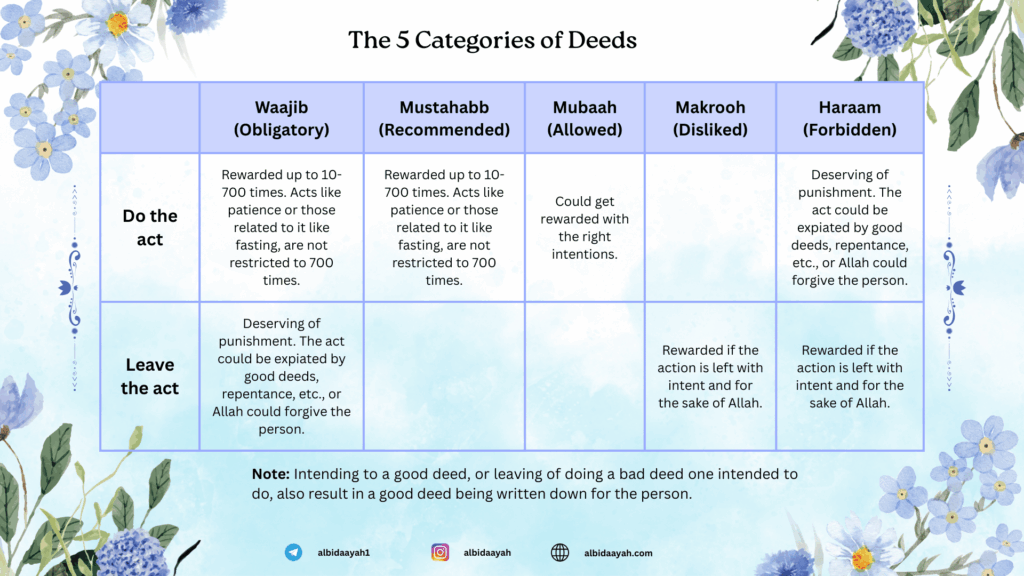
You see, any deed that a person does can only fall in one of five categories – obligatory, recommended, allowed, disliked and forbidden. The first four categories fall under halal (permissible) with the “disliked” category being the border between permissible and forbidden.
The difference between all these categories is what happens when you do an act or leave an act. The chart explains it well.

If you do an obligatory or recommended deed, you get rewarded for that by Allah. However, leaving the latter will not lead to punishment, whereas leaving the former does.
If you leave a forbidden or disliked act, you also get rewarded for that by Allah. However, doing the former leads to punishment whereas doing the latter does not (although it is not encouraged to do the latter).
[Note: In the Quran, “makrooh” means hated and it refers to forbidden acts. Early scholars also used “makrooh” to mean haram (forbidden), so please remember this]
The middle category are allowed acts that don’t have punishment or reward attached to them like eating, sleeping, walking, etc. Most actions fall into this category.
Notice that reward is mentioned 4 times whereas punishment is only mentioned twice! Subhan Allah, many people only focus on punishment with regards to Islam, but look at the mercy of Allah. We have more chance to get rewarded than to get punished.
The chart is amazing, as you see. However, I later realised it needed a tweak.
See, when a person does a good deed, they get at least ten times the reward, not just one.
مَن جَاءَ بِالْحَسَنَةِ فَلَهُ عَشْرُ أَمْثَالِهَا
Whoever brings a good deed, shall have ten times the like thereof. [Surah Al-Anaam (6) : 160]
In fact, it can go up to 700 times, and with deeds related to patience (which includes fasting, a type of patience), the reward can can be more than that, subhan Allah!
عَنْ أَبِي هُرَيْرَةَ، – رضى الله عنه – قَالَ: قَالَ رَسُولُ اللَّهِ صلى الله عليه وسلم : كُلُّ عَمَلِ ابْنِ آدَمَ يُضَاعَفُ الْحَسَنَةُ عَشْرُ أَمْثَالِهَا إِلَى سَبْعِمِائَةِ ضِعْفٍ قَالَ اللَّهُ عَزَّ وَجَلَّ إِلاَّ الصَّوْمَ فَإِنَّهُ لِي وَأَنَا أَجْزِي بِهِ يَدَعُ شَهْوَتَهُ وَطَعَامَهُ مِنْ أَجْلِي لِلصَّائِمِ فَرْحَتَانِ فَرْحَةٌ عِنْدَ فِطْرِهِ وَفَرْحَةٌ عِنْدَ لِقَاءِ رَبِّهِ وَلَخُلُوفُ فِيهِ أَطْيَبُ عِنْدَ اللَّهِ مِنْ رِيحِ الْمِسْكِ
Abu Hurairah (radiallahu anhu) reported Allah’s Messenger (sallallahu alaihi wasallam) as saying: “Every (good) deed of the son of Adam would be multiplied, a good deed receiving a tenfold to seven hundredfold reward. Allah, the Exalted and Majestic, has said: With the exception of fasting, for it is done for Me and I will give a reward for it, for one abandons his passion and food for My sake. There are two occasions of joy for one who fasts, joy when he breaks it, and joy when he meets his Lord, and the breath (of an observer of fast) is sweeter to Allah than the fragrance of musk.” [Sahih Muslim, Hadeeth No. 2567]
إِنَّمَا يُوَفَّى الصَّابِرُونَ أَجْرَهُم بِغَيْرِ حِسَابٍ
“Only those who are patient shall receive their rewards in full, without reckoning.” [Surah Az-Zumar (39) : 10]
There’s one thing to remember though. A person only gets reward for a good deed if they fulfill two conditions. The first is that the deed should be done for the sake of Allah.
عن عُمَرَ بْنَ الْخَطَّابِ ـ رضى الله عنه قَالَ سَمِعْتُ رَسُولَ اللَّهِ صلى الله عليه وسلم يَقُولُ :إِنَّمَا الأَعْمَالُ بِالنِّيَّاتِ، وَإِنَّمَا لِكُلِّ امْرِئٍ مَا نَوَى، فَمَنْ كَانَتْ هِجْرَتُهُ إِلَى دُنْيَا يُصِيبُهَا أَوْ إِلَى امْرَأَةٍ يَنْكِحُهَا فَهِجْرَتُهُ إِلَى مَا هَاجَرَ إِلَيْهِ
Umar ibn Al-Khattab (radiallahu anhu) narrated: I heard Allah’s Messenger (sallallahu alaihi wasallam) saying, “The reward of deeds depends upon the intentions and every person will get the reward according to what he has intended. So whoever emigrated for worldly benefits or for a woman to marry, his emigration was for what he emigrated for.” [Sahih Al-Bukhari, Volume 1, Hadeeth No. 1]
The second condition is that the deed should be done in accordance with the Sunnah of the Prophet (sallallahu alaihi wasallam).
عن عائشة رضي الله عنها قالت: قال رسول الله صلى الله عليه وسلم :من عمل عملا ليس عليه أمرنا فهو رد
Aishah (radiallahu anha) said: The Messenger of Allah (sallallahu alaihi wasallam) said, “He who does something contrary to our way (i.e., Islam) will have it rejected.” [Sahih Muslim, Hadeeth No. 4267]
This condition is why bidah (innovation) does not get rewarded – as it goes against the Sunnah. In fact, innovated acts are actually sinful.
Now, doing a good deed is not the only way to get a reward. Even intending to do a good deed (which the person didn’t get around to doing) or leaving an evil deed (which one had intended to do) results in a good deed being written down.
عَنِ ابْنِ عَبَّاسٍ ـ رضى الله عنهما ـ عَنِ النَّبِيِّ صلى الله عليه وسلم فِيمَا يَرْوِي عَنْ رَبِّهِ عَزَّ وَجَلَّ قَالَ قَالَ “ إِنَّ اللَّهَ كَتَبَ الْحَسَنَاتِ وَالسَّيِّئَاتِ، ثُمَّ بَيَّنَ ذَلِكَ فَمَنْ هَمَّ بِحَسَنَةٍ فَلَمْ يَعْمَلْهَا كَتَبَهَا اللَّهُ لَهُ عِنْدَهُ حَسَنَةً كَامِلَةً، فَإِنْ هُوَ هَمَّ بِهَا فَعَمِلَهَا كَتَبَهَا اللَّهُ لَهُ عِنْدَهُ عَشْرَ حَسَنَاتٍ إِلَى سَبْعِمِائَةِ ضِعْفٍ إِلَى أَضْعَافٍ كَثِيرَةٍ، وَمَنْ هَمَّ بِسَيِّئَةٍ فَلَمْ يَعْمَلْهَا كَتَبَهَا اللَّهُ لَهُ عِنْدَهُ حَسَنَةً كَامِلَةً، فَإِنْ هُوَ هَمَّ بِهَا فَعَمِلَهَا كَتَبَهَا اللَّهُ لَهُ سَيِّئَةً وَاحِدَةً ”
Narrated Ibn Abbas (radiallahu anhu): The Prophet (sallallahu alaihi wasallam) narrating from his Lord, the Mighty and Sublime, and said, “Allah ordered (the appointed angels over you) that the good and the bad deeds be written, and He then showed (the way) how (to write). If somebody intends to do a good deed and he does not do it, then Allah will write for him a full good deed (in his account with Him); and if he intends to do a good deed and actually did it, then Allah will write for him (in his account) with Him (its reward equal) from ten to seven hundred times to many more times: and if somebody intended to do a bad deed and he does not do it, then Allah will write a full good deed (in his account) with Him, and if he intended to do it (a bad deed) and actually did it, then Allah will write one bad deed (in his account) .” [Sahih Al-Bukhari, Volume 8, Hadeeth No. 498]
عَنْ أَبِي هُرَيْرَةَ، أَنَّ رَسُولَ اللَّهِ صلى الله عليه وسلم قَالَ “ يَقُولُ اللَّهُ إِذَا أَرَادَ عَبْدِي أَنْ يَعْمَلَ سَيِّئَةً فَلاَ تَكْتُبُوهَا عَلَيْهِ حَتَّى يَعْمَلَهَا، فَإِنْ عَمِلَهَا فَاكْتُبُوهَا بِمِثْلِهَا وَإِنْ تَرَكَهَا مِنْ أَجْلِي فَاكْتُبُوهَا لَهُ حَسَنَةً وَإِذَا أَرَادَ أَنْ يَعْمَلَ حَسَنَةً فَلَمْ يَعْمَلْهَا فَاكْتُبُوهَا لَهُ حَسَنَةً، فَإِنْ عَمِلَهَا فَاكْتُبُوهَا لَهُ بِعَشْرِ أَمْثَالِهَا إِلَى سَبْعِمِائَةٍ ”.
Narrated Abu Hurairah (radiallahu anhu): Allah’s Messenger (sallallahu alaihi wasallam) said, “Allah says, ‘If My slave intends to do a bad deed then (O Angels) do not write it unless he does it; if he does it, then write it as it is, but if he refrains from doing it for My Sake, then write it as a good deed (in his account). (On the other hand) if he intends to do a good deed, but does not do it, then write a good deed (in his account), and if he does it, then write it for him (in his account) as ten good deeds up to seven-hundred times.’ “ [Sahih Al-Bukhari, Volume 9, Hadeeth No. 592]
Bad deeds are never multiplied although they may graver in certain times and places. [Please read this short article for more info.]
There’s even more. Those things we believe are “normal acts” can also gain us reward.
عَنْ أَبِي، ذَرٍّ أَنَّ نَاسًا، مِنْ أَصْحَابِ النَّبِيِّ صلى الله عليه وسلم قَالُوا لِلنَّبِيِّ صلى الله عليه وسلم يَا رَسُولَ اللَّهِ ذَهَبَ أَهْلُ الدُّثُورِ بِالأُجُورِ يُصَلُّونَ كَمَا نُصَلِّي وَيَصُومُونَ كَمَا نَصُومُ وَيَتَصَدَّقُونَ بِفُضُولِ أَمْوَالِهِمْ . قَالَ ” أَوَلَيْسَ قَدْ جَعَلَ اللَّهُ لَكُمْ مَا تَصَّدَّقُونَ إِنَّ بِكُلِّ تَسْبِيحَةٍ صَدَقَةً وَكُلِّ تَكْبِيرَةٍ صَدَقَةٌ وَكُلِّ تَحْمِيدَةٍ صَدَقَةٌ وَكُلِّ تَهْلِيلَةٍ صَدَقَةٌ وَأَمْرٌ بِالْمَعْرُوفِ صَدَقَةٌ وَنَهْىٌ عَنْ مُنْكَرٍ صَدَقَةٌ وَفِي بُضْعِ أَحَدِكُمْ صَدَقَةٌ ” . قَالُوا يَا رَسُولَ اللَّهِ أَيَأْتِي أَحَدُنَا شَهْوَتَهُ وَيَكُونُ لَهُ فِيهَا أَجْرٌ قَالَ ”أَرَأَيْتُمْ لَوْ وَضَعَهَا فِي حَرَامٍ أَكَانَ عَلَيْهِ فِيهَا وِزْرٌ فَكَذَلِكَ إِذَا وَضَعَهَا فِي الْحَلاَلِ كَانَ لَهُ أَجْرٌ”
Abu Dharr (radiallahu anhu) reported: Some of the people from among the Companions of the Messenger of Allah (sallallahu alaihi wasallam) said to him: Messenger of Allah, the rich have taken away (all the) reward. They observe prayer as we do; they keep the fasts as we keep, and they give sadaqah (charity) out of their surplus riches. Upon this he (the Prophet) said: Has Allah not prescribed for you (a course) by following which you can (also) do sadaqah? In every declaration of the glorification of Allah (i. e. saying Subhan Allah) there is a sadaqah, and every Takbir (i. e. saying Allahu Akbar) is a sadaqah, and every praise of His (saying Alhamdu lillah) is a sadaqah and every declaration that He is One (La illaaha illallah) is a sadaqah, and enjoining of good is a sadaqah, and forbidding of that which is evil is a sadaqah, and in man’s sexual Intercourse (with his wife) there is a sadaqah. They (the Companions) said: Messenger of Allah, is there reward for him who satisfies his sexual passion among us? He said: Tell me, if he were to devote it to something forbidden, would it not be a sin on his part? Similarly, if he were to devote it to something lawful, he should have a reward. [Sahih Muslim, Hadeeth No. 2198]
عَنْ أَبِي بُرْدَةَ، قَالَ بَعَثَ رَسُولُ اللَّهِ صلى الله عليه وسلم أَبَا مُوسَى وَمُعَاذَ بْنَ جَبَلٍ إِلَى الْيَمَنِ، قَالَ وَبَعَثَ كُلَّ وَاحِدٍ مِنْهُمَا عَلَى مِخْلاَفٍ قَالَ وَالْيَمَنُ مِخْلاَفَانِ ثُمَّ قَالَ : يَسِّرَا وَلاَ تُعَسِّرَا، وَبَشِّرَا وَلاَ تُنَفِّرَا . فَانْطَلَقَ كُلُّ وَاحِدٍ مِنْهُمَا إِلَى عَمَلِهِ، وَكَانَ كُلُّ وَاحِدٍ مِنْهُمَا إِذَا سَارَ فِي أَرْضِهِ كَانَ قَرِيبًا مِنْ صَاحِبِهِ أَحْدَثَ بِهِ عَهْدًا، فَسَلَّمَ عَلَيْهِ، فَسَارَ مُعَاذٌ فِي أَرْضِهِ قَرِيبًا مِنْ صَاحِبِهِ أَبِي مُوسَى، فَجَاءَ يَسِيرُ عَلَى بَغْلَتِهِ حَتَّى انْتَهَى إِلَيْهِ، وَإِذَا هُوَ جَالِسٌ، وَقَدِ اجْتَمَعَ إِلَيْهِ النَّاسُ، وَإِذَا رَجُلٌ عِنْدَهُ قَدْ جُمِعَتْ يَدَاهُ إِلَى عُنُقِهِ فَقَالَ لَهُ مُعَاذٌ يَا عَبْدَ اللَّهِ بْنَ قَيْسٍ، أَيَّمَ هَذَا قَالَ هَذَا رَجُلٌ كَفَرَ بَعْدَ إِسْلاَمِهِ. قَالَ لاَ أَنْزِلُ حَتَّى يُقْتَلَ. قَالَ إِنَّمَا جِيءَ بِهِ لِذَلِكَ فَانْزِلْ. قَالَ مَا أَنْزِلُ حَتَّى يُقْتَلَ فَأَمَرَ بِهِ فَقُتِلَ ثُمَّ نَزَلَ فَقَالَ يَا عَبْدَ اللَّهِ، كَيْفَ تَقْرَأُ الْقُرْآنَ قَالَ أَتَفَوَّقُهُ تَفَوُّقًا. قَالَ فَكَيْفَ تَقْرَأُ أَنْتَ يَا مُعَاذُ قَالَ أَنَامُ أَوَّلَ اللَّيْلِ فَأَقُومُ وَقَدْ قَضَيْتُ جُزْئِي مِنَ النَّوْمِ، فَأَقْرَأُ مَا كَتَبَ اللَّهُ لِي، فَأَحْتَسِبُ نَوْمَتِي كَمَا أَحْتَسِبُ قَوْمَتِي
Abu Burdah (radiallahu anhu) narrated: *Then Muadh dismounted and said, “O Abdullah (ibn Qais)! How do you recite the Quran ?” Abu Musa said, “I recite the Quran regularly at intervals and piecemeal. How do you recite it O Muadh?” Muadh said, “I sleep in the first part of the night and then get up after having slept for the time devoted for my sleep and then recite as much as Allah has written for me. So I seek Allah’s Reward for both my sleep as well as my prayer (at night).” [Sahih Al-Bukhari, Volume 5, Hadeeth 630. *This is a long hadeeth but I’ve only added the relevant portion.]
[My featured image for this post features worldly things to show that even these things can become an act of worship (and hence get rewarded for) with the correct intention.]
There’s even more. Many years ago, one of my teachers Shaikh Wadhaa Ash-Shaabi pointed out that we should not say that a person will get punished for doing an evil deed, rather we should say “He is deserving of punishment.” Why? Well, perhaps he will be forgiven for doing that evil deed.
Here’s one example of this.
عَنْ أَبِي سَعِيدٍ الْخُدْرِيِّ، أَنَّ نَبِيَّ اللَّهِ صلى الله عليه وسلم قَالَ : كَانَ فِيمَنْ كَانَ قَبْلَكُمْ رَجُلٌ قَتَلَ تِسْعَةً وَتِسْعِينَ نَفْسًا فَسَأَلَ عَنْ أَعْلَمِ أَهْلِ الأَرْضِ فَدُلَّ عَلَى رَاهِبٍ فَأَتَاهُ فَقَالَ إِنَّهُ قَتَلَ تِسْعَةً وَتِسْعِينَ نَفْسًا فَهَلْ لَهُ مِنَ تَوْبَةٍ فَقَالَ لاَ . فَقَتَلَهُ فَكَمَّلَ بِهِ مِائَةً ثُمَّ سَأَلَ عَنْ أَعْلَمِ أَهْلِ الأَرْضِ فَدُلَّ عَلَى رَجُلٍ عَالِمٍ فَقَالَ إِنَّهُ قَتَلَ مِائَةَ نَفْسٍ فَهَلْ لَهُ مِنْ تَوْبَةٍ فَقَالَ نَعَمْ وَمَنْ يَحُولُ بَيْنَهُ وَبَيْنَ التَّوْبَةِ انْطَلِقْ إِلَى أَرْضِ كَذَا وَكَذَا فَإِنَّ بِهَا أُنَاسًا يَعْبُدُونَ اللَّهَ فَاعْبُدِ اللَّهَ مَعَهُمْ وَلاَ تَرْجِعْ إِلَى أَرْضِكَ فَإِنَّهَا أَرْضُ سَوْءٍ . فَانْطَلَقَ حَتَّى إِذَا نَصَفَ الطَّرِيقَ أَتَاهُ الْمَوْتُ فَاخْتَصَمَتْ فِيهِ مَلاَئِكَةُ الرَّحْمَةِ وَمَلاَئِكَةُ الْعَذَابِ فَقَالَتْ مَلاَئِكَةُ الرَّحْمَةِ جَاءَ تَائِبًا مُقْبِلاً بِقَلْبِهِ إِلَى اللَّهِ . وَقَالَتْ مَلاَئِكَةُ الْعَذَابِ إِنَّهُ لَمْ يَعْمَلْ خَيْرًا قَطُّ . فَأَتَاهُمْ مَلَكٌ فِي صُورَةِ آدَمِيٍّ فَجَعَلُوهُ بَيْنَهُمْ فَقَالَ قِيسُوا مَا بَيْنَ الأَرْضَيْنِ فَإِلَى أَيَّتِهِمَا كَانَ أَدْنَى فَهُوَ لَهُ . فَقَاسُوهُ فَوَجَدُوهُ أَدْنَى إِلَى الأَرْضِ الَّتِي أَرَادَ فَقَبَضَتْهُ مَلاَئِكَةُ الرَّحْمَةِ . قَالَ قَتَادَةُ فَقَالَ الْحَسَنُ ذُكِرَ لَنَا أَنَّهُ لَمَّا أَتَاهُ الْمَوْتُ نَأَى بِصَدْرِهِ
Abu Saeed al-Khudri (radiallahu anhu) reported Allah’s Messenger (sallallahu alaihi wasallam) as saying: There was a person before you who had killed ninety-nine people and then made an inquiry about the learned people of the world (who could show him the way to salvation). He was directed to a monk. He came to him and told him that he had killed ninety-nine people and asked him whether there was any scope for his repentance to be accepted. He said: No. He killed him also and thus completed one hundred. He then asked about the learned people of the earth and he was directed to a scholar, and he told him that he had killed one hundred people and asked him whether there was any scope for his repentance to be accepted. He said: Yes; what stands between you and the repentance? You better go to such and such land; there are people devoted to prayer and worship and you also worship along with them and do not come to the land of yours since it was an evil land (for you). So he went away and he had hardly covered half the distance when death came to him and there was a dispute between the angels of mercy and the angels of punishment. The angels of mercy said: This man has come as penitent and remorseful to Allah and the angels of punishment said: He has done no good at all. Then there came another angel in the form of a human being in order to decide between them. He said: You measure the land to which he has drawn near. They measured it and found him nearer to the land where he intended to go (the land of piety), and so the angels of mercy took possession of it. Qatadah said that Hasan told him that it was said to them that as death approached him, he crawled upon his chest (and managed) to slip in the land of mercy. [Sahih Muslim, Hadeeth No. 6662]
Here’s another example.
عَنْ أَبِي هُرَيْرَةَ ـ رضى الله عنه ـ قَالَ قَالَ النَّبِيُّ صلى الله عليه وسلم : بَيْنَمَا كَلْبٌ يُطِيفُ بِرَكِيَّةٍ كَادَ يَقْتُلُهُ الْعَطَشُ، إِذْ رَأَتْهُ بَغِيٌّ مِنْ بَغَايَا بَنِي إِسْرَائِيلَ، فَنَزَعَتْ مُوقَهَا فَسَقَتْهُ، فَغُفِرَ لَهَا بِهِ
Narrated Abu Hurairah (radiallahu anhu): The Prophet (sallallahu alaihi wasallam) said, “While a dog was going round a well and was about to die of thirst, a prostitute from the prostitutes of Banu Israil saw it and took off her shoe and watered it. So Allah forgave her because of that good deed.” [Sahih Al-Bukhari, Volume 4, Hadeeth No. 673]
This comes as no surprise as we are encouraged to repent to Allah.
قُلْ يَا عِبَادِيَ الَّذِينَ أَسْرَفُوا عَلَىٰ أَنفُسِهِمْ لَا تَقْنَطُوا مِن رَّحْمَةِ اللَّـهِ ۚ إِنَّ اللَّـهَ يَغْفِرُ الذُّنُوبَ جَمِيعًا ۚ إِنَّهُ هُوَ الْغَفُورُ الرَّحِيمُ
وَأَنِيبُوا إِلَىٰ رَبِّكُمْ وَأَسْلِمُوا لَهُ مِن قَبْلِ أَن يَأْتِيَكُمُ الْعَذَابُ ثُمَّ لَا تُنصَرُونَ
Say: “O Ibaadi (My slaves) who have transgressed against themselves (by committing evil deeds and sins)! Despair not of the Mercy of Allah, verily Allah forgives all sins. Truly, He is Oft-Forgiving, Most Merciful. And turn in repentance and in obedience with true Faith (Islamic Monotheism) to your Lord and submit to Him, (in Islam), before the torment comes upon you, then you will not be helped.” [Surah Az-Zumar (39) : 53 -54]
وَسَارِعُوا إِلَىٰ مَغْفِرَةٍ مِّن رَّبِّكُمْ وَجَنَّةٍ عَرْضُهَا السَّمَاوَاتُ وَالْأَرْضُ أُعِدَّتْ لِلْمُتَّقِينَ
الَّذِينَ يُنفِقُونَ فِي السَّرَّاءِ وَالضَّرَّاءِ وَالْكَاظِمِينَ الْغَيْظَ وَالْعَافِينَ عَنِ النَّاسِ ۗ وَاللَّـهُ يُحِبُّ الْمُحْسِنِينَ
وَالَّذِينَ إِذَا فَعَلُوا فَاحِشَةً أَوْ ظَلَمُوا أَنفُسَهُمْ ذَكَرُوا اللَّـهَ فَاسْتَغْفَرُوا لِذُنُوبِهِمْ وَمَن يَغْفِرُ الذُّنُوبَ إِلَّا اللَّـهُ وَلَمْ يُصِرُّوا عَلَىٰ مَا فَعَلُوا وَهُمْ يَعْلَمُونَ
أُولَـٰئِكَ جَزَاؤُهُم مَّغْفِرَةٌ مِّن رَّبِّهِمْ وَجَنَّاتٌ تَجْرِي مِن تَحْتِهَا الْأَنْهَارُ خَالِدِينَ فِيهَا ۚ وَنِعْمَ أَجْرُ الْعَامِلِينَ
And march forth in the way (which leads to) forgiveness from your Lord, and for Paradise as wide as are the heavens and the earth, prepared for Al-Muttaqoon (the pious). Those who spend [in Allah’s Cause – deeds of charity, alms, etc.] in prosperity and in adversity, who repress anger, and who pardon men; verily, Allah loves Al-Muhsinoon (the gooddoers).And those who, when they have committed Fahishah (illegal sexual intercourse etc.) or wronged themselves with evil, remember Allah and ask forgiveness for their sins; – and none can forgive sins but Allah – And do not persist in what (wrong) they have done, while they know. For such, the reward is Forgiveness from their Lord, and Gardens with rivers flowing underneath (Paradise), wherein they shall abide forever. How excellent is this reward for the doers (who do righteous deeds according to Allah’s Orders). [Surah Aal-Imraan (3) : 133-136]
وَمَن يَعْمَلْ سُوءًا أَوْ يَظْلِمْ نَفْسَهُ ثُمَّ يَسْتَغْفِرِ اللَّـهَ يَجِدِ اللَّـهَ غَفُورًا رَّحِيمًا
And whoever does evil or wrongs himself but afterwards seeks Allah’s Forgiveness, he will find Allah Oft-Forgiving, Most Merciful. [Surah An-Nisaa (4) : 110]
There’s one last thing regarding leaving disliked and forbidden deeds. They need to be left intentionally, not forgetfully or out of ignorance. Also, the person should not have left it (i.e. the disliked or forbidden deed) due to them not being able to do the evil deed (which they wanted to do). In addition to this, the person must have left it for the sake of Allah, not due to a worldly reason like fear of what people would say, or worry that this act might harm them (e.g. not drinking alcohol due to health concerns rather than the fear of Allah)
So, keeping all the above in mind, here is how I would update the chart.
Subhan Allah, it is just reward after reward. And after all this, so many people still refuse to fully submit to Allah. How can that be?
Discover more from Al Bidaayah
Subscribe to get the latest posts sent to your email.